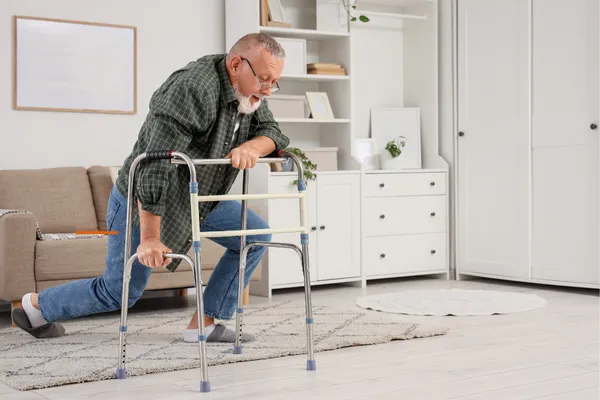
Preventing Senior Falls at Home: A Reverse‑Mortgage Specialist’s Data‑Driven Guide to Safer Aging in Place
By: Brian Wiesner, Mortgage Broker NMLS 276531
I work with homeowners and families who want to age in place—and one of the most common “wake‑up calls” I see is a fall at home. The data backs up why this matters: Falls are common, costly, and increasingly deadly for Americans 65+, but many are preventable with practical home changes and a clear plan.
Key takeaways:
About 1 in 4 older adults (65+) report falling each year—that’s 14+ million people—and roughly9 millionof those falls lead to injuries that require medical treatment or limit activity.
Emergency and hospital care is massive: The Centers for Disease Control and Prevention estimates~3 million emergency department visitsand~1 million fall‑related hospitalizationseach year among older adults.
Deaths are rising: In 2023, the National Center for Health Statistics reported 41,400 unintentional fall deathsamong adults 65+ (U.S.).
The strongest research shows home fall‑hazard interventions reduce falls—especially for higher‑risk seniors(for example, someone who has fallen before).
What the latest national numbers show for adults 65+
How often do seniors fall—and how often are those falls serious?
National surveillance and surveys show falls are not “rare accidents” in older age:
Over 14 millionadults 65+ in the U.S. report falling each year (about1 in 4).
About 37% of older adults who fall report an injury that required medical treatment or restricted activity—an estimated ~9 million fall injuries.
The CDC also notes 1 out of 10 fallsresults in an injury that causes an older adult to restrict activity for a day or more or seek medical attention.
Emergency visits and hospitalizations
The health‑system impact is huge:
The CDC estimates ~3 million emergency department visits each year for older adult falls.
The CDC estimates ~1 million fall‑related hospitalizations each year among older adults.
In 2021, emergency departments recorded nearly 3 million visitsfor older adult falls, and falls caused over 38,000 deaths among adults ages 65+.
Deaths: the most sobering trend
Falls are now a leading injury cause of death in older age, and the trend is moving the wrong direction:
In 2023, there were 41,400 unintentional fall deaths among adults 65+ in the U.S.
The 2023 unintentional fall death ratefor adults 65+ was 69.9 per 100,000, and the rate increases sharply with age (especially 85+).
The CDC’s newer summary trends show the age‑adjusted fall death rate increased 21% from 2018 to 2024 (CDC WONDER mortality data; 2024 shown in CDC’s trend view).
CDC’s patient/caregiver materials emphasize the scale: “Every second of every day an older adult falls,” and about 41,000 older adults diefrom falls each year (CDC).
The “why it matters” injuries: hip fractures and brain injuries
For many families, it’s not just “the fall”—it’s what the fall triggers (loss of independence, rehab, or needing assisted living). The CDC highlights several key injury links:
Falls are the most common cause of traumatic brain injuries (TBI).
Each year, nearly 319,000 older adults are hospitalized for hip fractures, and CDC notes a large share of hip fracture outcomes are fall‑related.
Global context: The World Health Organization calls falls the second leading cause of unintentional injury deaths worldwide, with an estimated 37.3 millionfalls severe enough to need medical attention each year (global estimate).
Why seniors fall at home: common hazards and health factors
In my experience, most falls are not caused by one dramatic event. They’re usually astacking of small risks—and the CDC says the same: “Most falls are caused by a combination of risk factors. The more risk factors a person has, the greater their chances of falling.”
Home hazards: the “ordinary” stuff that becomes dangerous
The CDC calls out typical household hazards like:
Broken or uneven steps
Throw rugs
Clutter that can be tripped over
Research summaries also point out that falls frequently occur at home and that measurable home hazards correlate with increased risk.
Medications and “feeling off balance”
Medication effects are a big, often overlooked contributor. The CDC lists theuse of medicines—including tranquilizers, sedatives, antidepressants, and even some over‑the‑counter medications—as a fall risk factor because they can affect balance and steadiness.
Vision, strength, and mobility changes
The CDC identifies several physical risk factors that commonly drive falls:
Lower body weakness
Walking/balance difficulties
Vision problems
Foot pain or poor footwear
Vitamin D deficiency
A major theme I share with homeowners: falls are not “just aging,” and many risks are modifiable. The CDC explicitly states fallscan be preventedand focuses on practical steps for staying independent.
Do home modifications actually reduce falls? What the studies say.
This is where the conversation gets hopeful—because education alone is rarely enough. The strongest evidence supports professional home fall‑hazard assessment + targeted fixes, especially for seniors with higher risk (prior falls, recent hospitalization, needing help with daily activities).
High‑quality evidence: systematic reviews
A major Cochrane review summarized on Cochrane’s site reports:
For higher‑risk older adults,removing environmental fall hazards in the home can reduce the number of falls by 38%.
Across studies, home fall‑hazard interventions probably reduce the overall rate of falls by ~26% (rate ratio 0.74), and results are strongest when targeted to higher‑risk participants.
A key practical point: the same Cochrane summary notes evidence isless clearabout reductions in the most severe outcomes (like fractures or hospitalizations) because fewer trials measure those outcomes directly.
Real‑world intervention trial: “bundle” modifications reduce injuries
A landmark randomized trial published inThe Lancettested a package of practical safety upgrades such as handrails (indoors/outdoors), grab rails in bathrooms, improved outside lighting, step edging, and slip‑resistant surfacing.
Results from the abstract:
After adjustment, the intervention was associated with a 26% reduction in injuries caused by falls at home (relative rate 0.74).
Injuries most directly related to the modifications were reduced even more (reported as 39%).
U.S. example: tailored hazard removal may reduce fall rate
A pragmatic randomized clinical trial inJAMA Network Openfound no statistically significant difference in “time to first fall,” but did report areduction in the rate of fallsas a secondary outcome (relative risk reported around 0.62 in their results table/summary).
Bottom line from the research: Packages of targeted home fixes—especially when guided by professionals and aimed at higher‑risk seniors—can meaningfully reduce falls and fall‑related injuries, even if not every study shows the same effect on every outcome.
Top home safety improvements for seniors: the “Top 7” with cost and install time
Below are seven of the most practical, high‑value improvements I see families prioritize after a fall—or ideally before one happens.
How a reverse mortgage (HECM) can help pay for safety upgrades (no sales pitch)
Many seniors are “house‑rich” but cash‑tight, especially when a sudden safety project comes up. A HECM (Home Equity Conversion Mortgage)—the FHA‑insured reverse mortgage—can allow eligible homeowners to access part of their home equity forhome maintenance and repairs, among other needs.
Basic eligibility commonly includes being 62+ although some lenders offer programs for ages 55+, living in the home as a principal residence, having substantial equity, and completing HUD‑approved counseling.
Important risks and responsibilities (the part I always want families to understand clearly):
Even though a HECM typically does not require monthly principal-and-interest payments, borrowers must still pay property charges(like taxes and homeowners insurance) and keep the home in good repair. If those obligations aren’t met, the loan can go into default and may lead to foreclosure.
Source links used in this post
CDC – Older Adult Falls Data (updated Feb 26, 2026):
https://www.cdc.gov/falls/data-research/index.html
CDC – Facts About Falls (updated Jan 27, 2026):
https://www.cdc.gov/falls/data-research/facts-stats/index.html
CDC – About Older Adult Fall Prevention (updated Jan 27, 2026):
https://www.cdc.gov/falls/about/index.html
CDC MMWR (2023) – Nonfatal and Fatal Falls Among Adults Aged ≥65 Years, 2020–2021:
https://www.cdc.gov/mmwr/volumes/72/wr/mm7235a1.htm
NCHS Data Brief No. 532 (June 2025) – Unintentional Fall Deaths in Adults Age 65 and Older: United States, 2023:
https://www.cdc.gov/nchs/products/databriefs/db532.htm
Cochrane Evidence Summary (2023) – Reducing fall hazards within the environment:
https://www.cochrane.org/evidence/CD013258_reducing-fall-hazards-within-environment
Lancet RCT (2015) – Home modifications to reduce injuries from falls (HIPI study) – PubMed abstract:
https://pubmed.ncbi.nlm.nih.gov/25255696/
JAMA Network Open RCT (2021) – Home Hazard Removal to Reduce Falls:
https://jamanetwork.com/journals/jamanetworkopen/fullarticle/2783628
AARP (Nov 8, 2024) – Fall prevention policy article with CDC-referenced national counts:
https://www.aarp.org/advocacy/fall-prevention-bill-support-2024/
WHO – Falls fact sheet (global context):
https://www.who.int/news-room/fact-sheets/detail/falls
HUD – HECM reverse mortgage program overview:
https://www.hud.gov/hud-partners/single-family-hecmhome
CFPB – Reverse mortgage eligibility (HECM basics):
https://www.consumerfinance.gov/ask-cfpb/can-anyone-take-out-a-reverse-mortgage-loan-en-227/
CFPB – Reverse mortgage borrower responsibilities:
https://www.consumerfinance.gov/ask-cfpb/what-are-my-responsibilities-as-a-reverse-mortgage-loan-borrower-en-235/
Cost sources for estimates:
Grab bars (Angi):
https://www.angi.com/articles/grab-bar-installation-cost.htm
Stair lift (Angi):
https://www.angi.com/articles/how-much-stair-lift-cost.htm
Wheelchair ramp (Angi):
https://www.angi.com/articles/how-much-does-it-cost-build-handicap-ramp.htm
Stair railing (Angi):
https://www.angi.com/articles/approximately-how-much-should-it-cost-install-stair-railing-has-5-stairs-railing-needed.htm
LVT/LVP flooring (HomeAdvisor):
https://www.homeadvisor.com/cost/flooring/install-lvt/
Tub-to-shower conversion cost + timeline (This Old House):
https://www.thisoldhouse.com/bathrooms/tub-to-shower-conversion-cost
Motion-sensor light installation (Angi):
https://www.angi.com/articles/how-much-motion-sensor-lights-cost.htm


